Jebel Hafeet is Abu Dhabi's highest peak and the UAE's second-tallest mountain, rising 1,249 metres above the desert floor on the border between Al Ain and Oman. Famous for one of the world's greatest driving roads, a UNESCO-recognised archaeological park, and panoramic sunset views over the Garden City, Jebel Hafeet is one of the most rewarding day trips in the country. This complete guide covers everything you need to know in 2026: how to get there, what the drive itself involves, what to do once you arrive, camping and glamping options, prices, opening hours, and answers to the most common questions visitors ask before making the trip.
What Is Jebel Hafeet and Why Is It Famous?
Jebel Hafeet (also spelled Jebel Hafit) is a limestone mountain standing 1,249 metres tall, part of the Hajar mountain range and located just south of Al Ain, right on the UAE-Oman border. It is Abu Dhabi's tallest landmark and the second-highest peak in the entire UAE, behind only Jebel Jais in Ras Al Khaimah.
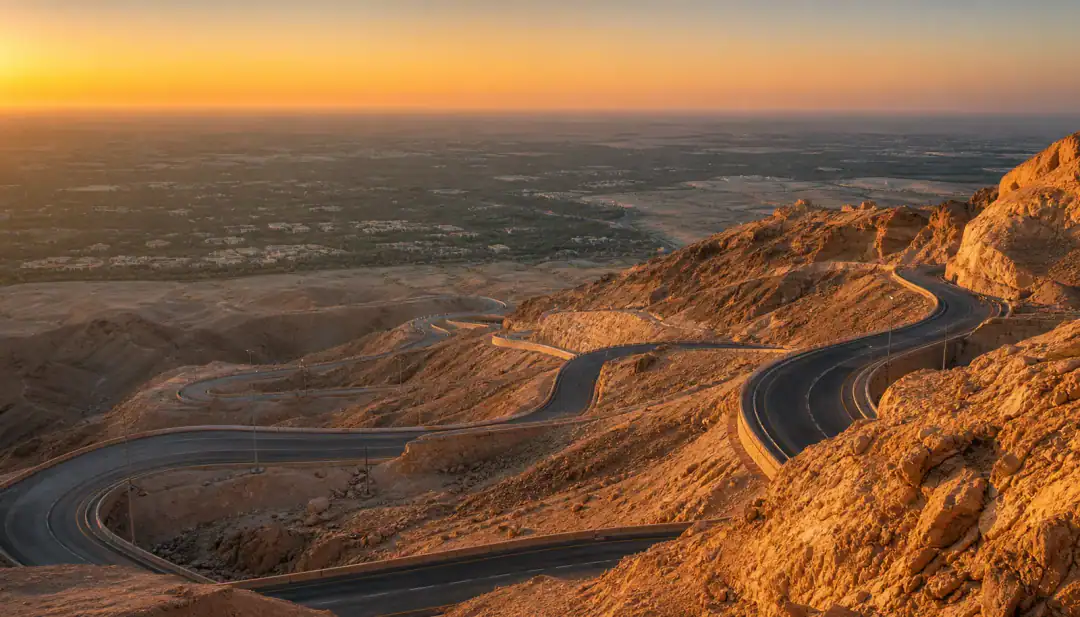
The mountain is famous for two distinct reasons. The first is the drive itself: an 11.7-kilometre mountain road with more than 60 sweeping curves, engineered with three lanes (two heading up, one coming down) and consistently ranked among the world's greatest driving roads by automotive publications including Edmunds.com. The second is its archaeological significance. The mountain's foothills contain more than 500 ancient tombs dating back roughly 5,000 years, among the most important Bronze Age discoveries in the UAE, which helped earn Al Ain its status as the country's first UNESCO World Heritage Site in 2011.
What Does “Jebel Hafeet” Mean?
Jebel Hafeet translates to “empty mountain” in Arabic, a name that reflects the stark, rocky desert landscape surrounding it.
Where Is Jebel Hafeet and How Do You Get There?
Jebel Hafeet sits at the southern edge of Al Ain, right on the border with Oman, approximately 160 to 170 kilometres from both Abu Dhabi city and Dubai.
From Abu Dhabi: Take the E22 highway east toward Al Ain. The drive takes approximately 1 hour 30 minutes to 1 hour 50 minutes depending on traffic.
From Dubai: Take the E66 (Dubai-Al Ain Road) or the E311 (Sheikh Mohammed bin Zayed Road), both leading directly to Al Ain. The drive takes approximately 1 hour 45 minutes to 2 hours.
Once in Al Ain, signage and GPS navigation will direct you straight to the base of the mountain road. The summit road itself is well-paved, well-lit, and easy to follow, with no off-roading or 4x4 required, though it does demand attentive driving given the number of switchbacks.
How to Reach the Summit
You can reach the top of Jebel Hafeet by car, motorbike, or, for the genuinely fit, bicycle. The 11.7-kilometre road climbs from the desert floor to the summit through 60 hairpin turns, engineered with three lanes so that two lanes carry traffic upward and one lane carries traffic down, reducing the risk of head-on incidents despite the constant switchbacks.
A practical tip echoed by frequent visitors: the descent is notably harder on a vehicle's brakes than the ascent, so allow your brakes to cool periodically on the way down rather than riding them continuously, and check your brakes before attempting the descent if you are driving a rental.
When Is the Best Time to Visit Jebel Hafeet?
Jebel Hafeet is open to visitors year-round, but the experience varies dramatically by season. The cooler months, from November through April, are by far the most comfortable for driving, hiking, or spending extended time at the summit and surrounding desert park. Summer temperatures in Al Ain regularly exceed 40°C, and the exposed, rocky terrain offers little shade, so visiting between May and October requires extra caution: bring plenty of water, avoid strenuous hiking during peak heat, and time outdoor activities for early morning or evening.
The single most popular time of day to visit, in any season, is sunset. The drive up in the late afternoon, timed to reach the summit as the sun goes down over Al Ain and the surrounding desert, is widely regarded as the best possible way to experience the mountain. Sunrise is the other standout option for visitors willing to make an early start, offering a quieter summit and equally dramatic light. Note that temperatures at the 1,249-metre summit are noticeably cooler and windier than the city below, so a light jacket is worth packing even in winter.
What to Do at the Summit
At the top of Jebel Hafeet, visitors are rewarded with sweeping panoramic views across Al Ain's oases, the surrounding desert, and on clear days, into Oman itself. A small population of friendly cats has made the summit viewpoint home, and they have become something of an unofficial mascot for visitors taking photos at the top.
Near the summit, the Mercure Grand Jebel Hafeet Hotel offers dining with a view, making it a popular stop for a meal after the drive up, whether you are staying overnight or simply pausing before heading back down.
Jebel Hafeet Desert Park
At the base of the mountain, stretching across a nine-kilometre area, lies Jebel Hafeet Desert Park, a family-friendly attraction combining outdoor adventure with genuine archaeological significance. The park was officially recognised by UNESCO in 2011 as a vital component of the Cultural Sites of Al Ain.
Opening Hours
The park generally opens at 8:00am daily and closes around sunset, approximately 6:00pm, though timings can vary seasonally. Booking activities in advance is strongly recommended, since many run on a first-come, first-served basis.
Activities at Jebel Hafeet Desert Park
- Hiking and guided tomb walks: explore the trails on foot, including guided hikes that take you directly to the Jebel Hafeet Tombs
- Mountain biking and cycling: dedicated areas for cycling with family or friends
- Horse riding: approximately AED 30 per person for a 15-minute ride through the desert trails
- Camel riding: approximately AED 30 per person for a 15-minute ride, a more traditional way to take in the landscape
- General park entry: as low as AED 5 per person for basic access to the grounds
The Jebel Hafeet Tombs
The tombs at the foot of the mountain are single-chamber structures built from local, roughly cut stone, dating to the very beginning of the Bronze Age in the UAE. They were excavated in 1959 by a Danish archaeological team at the personal request of Sheikh Zayed bin Sultan Al Nahyan, the UAE's Founding Father. Excavations uncovered ceramic vessels and copper artefacts, evidence that maritime trade across the Arabian Gulf was already active at this early date. These tombs differ from the later Umm an-Nar period tombs found nearby, which were constructed from finely worked stone blocks and held the remains of hundreds of individuals rather than a single chamber. In total, the wider Jebel Hafeet area is home to more than 500 of these ancient tombs.
Camping and Glamping at Jebel Hafeet Desert Park
One of the standout features of Jebel Hafeet Desert Park is its tiered camping system, designed to suit everyone from budget backpackers to travellers wanting a five-star desert escape.
Basic Camping
Bring your own tent and equipment and pitch up at a designated plot. This is the most affordable option, with site prices starting from around AED 100 for a small plot. Camping gear is widely available at inexpensive stores in both Al Ain and Abu Dhabi city if you do not already own your own.
Fully Serviced Camping
A Bedouin-style camp experience that includes breakfast, with prices starting from around AED 500 depending on tent size. This option removes the need to bring your own equipment while still delivering an authentic desert camping atmosphere.
Bubble Glamping and Luxury Dome Tents
The premium tier. Five-star, fully furnished glamping tents come complete with air conditioning, private showers, and in some cases a private plunge pool facing the mountain. Reported pricing for two adults runs from approximately AED 700 for a bubble tent with external private shower facilities, up to around AED 900 for a luxury dome tent with a full internal bathroom and air conditioning. Some operators in the park, such as Pura Eco Retreat, also offer an on-site restaurant for dinner, a fire pit, telescopes for stargazing, and complimentary transport and WiFi.
Reservations for any camping tier can typically be made online or by phone with the park's booking management, and advance booking is strongly recommended, particularly around weekends and the cooler winter months when demand is highest.
Green Mubazzarah Hot Springs
At the base of Jebel Hafeet sits Green Mubazzarah, a natural hot spring fed by mineral-rich water flowing down from the mountain. It is a popular and relaxing stop either before or after tackling the summit drive, offering a genuinely soothing contrast to the rocky, arid landscape surrounding it. Many visitors combine a soak at Green Mubazzarah with their Jebel Hafeet day trip, treating it as a natural spa experience to unwind after a day of hiking, camping, or driving.
Guided Tours to Jebel Hafeet
For visitors who prefer not to drive the mountain road themselves, particularly those travelling from Dubai, several tour operators run organised day trips combining the Jebel Hafeet summit with other Al Ain highlights such as Al Ain Oasis, Green Mubazzarah, and Al Jahili Fort.
Typical 2026 pricing for a full-day guided tour from Dubai:
- Standard shared tour: approximately AED 150 to AED 200 per person
- Private VIP 4x4 tour: approximately AED 900 to AED 1,300 per vehicle, accommodating up to seven passengers
A full-day tour typically runs 9 to 10 hours door-to-door, including hotel pickup and drop-off, the scenic mountain drive itself, and stops at the surrounding attractions. If you are unfamiliar with mountain driving or simply want to enjoy the views without focusing on the road, a guided tour removes the pressure of navigating the 60 hairpin turns yourself.
Where to Stay Near Jebel Hafeet
If you want to extend your trip beyond a single day, options range from staying right on the mountain to basing yourself in Al Ain city itself.
On the mountain: the Mercure Grand Jebel Hafeet Hotel sits near the summit, offering the most direct access to sunrise and sunset views without needing to drive up again.
At the base: Pura Eco Retreat, located within Jebel Hafeet Desert Park itself, offers glamping-style luxury tents and domes for those who want a unique overnight stay close to the archaeological sites.
In Al Ain city: a much wider range of conventional accommodation is available, including Telal Resort Al Ain (known for its traditional Arabian style), Radisson Blu Hotel & Resort Al Ain, and Al Ain Rotana, along with several budget-friendly options.
Planning a Visit to Al Ain or Considering a Move
If your trip to Jebel Hafeet has you thinking about Al Ain as more than just a day out, Masterpiece Property is a trusted real estate agency in Abu Dhabi with strong knowledge of the city's distinct property market, lifestyle, and neighbourhoods. Whether you are exploring Al Ain as a quieter, more affordable alternative to Abu Dhabi city or comparing it against the emirate's coastal communities, the team can guide you through what is genuinely available, from leasehold apartments to villa communities across Al Ain's residential districts.
The agency also covers apartments, villas, townhouses, and plots across Abu Dhabi prime communities including Yas Island, Saadiyat Island, Al Reem Island, Al Raha Beach, Khalifa City, Masdar City, and Al Reef.
Contact Masterpiece Property today at 800 666 888 to discuss property options across Al Ain and the wider Emirate of Abu Dhabi.
Frequently Asked Questions
What is special about Jebel Hafeet?
Jebel Hafeet is Abu Dhabi's highest peak and the UAE's second-tallest mountain at 1,249 metres. It is renowned for its 11.7-kilometre mountain road with more than 60 hairpin turns, frequently ranked among the world's greatest driving roads, and for the more than 500 ancient Bronze Age tombs discovered at its base.
Where is Jebel Hafeet located?
Jebel Hafeet is located at the southern edge of Al Ain, in the Emirate of Abu Dhabi, directly on the border with Oman, approximately 160 to 170 kilometres from both Abu Dhabi city and Dubai.
How many tombs are at Jebel Hafeet?
Jebel Hafeet is home to more than 500 ancient tombs, with the earliest dating back approximately 5,000 years to the very start of the Bronze Age in the UAE.
What does Jebel Hafeet mean?
Jebel Hafeet translates to “empty mountain” in Arabic.
How long does it take to drive up Jebel Hafeet?
The summit road is 11.7 kilometres long with more than 60 turns. Most visitors take around 20 to 30 minutes to drive to the top at a comfortable pace, though the journey is worth slowing down for given the views along the way.
Can you camp at Jebel Hafeet?
Yes. Jebel Hafeet Desert Park at the base of the mountain offers three camping tiers: basic camping from around AED 100 (bring your own gear), fully serviced Bedouin-style camping from around AED 500 including breakfast, and luxury bubble glamping or dome tents from approximately AED 700 to AED 900 for two adults, including air conditioning and private bathroom facilities.
What is the best time to visit Jebel Hafeet?
The cooler months from November to April are the most comfortable overall, and sunset is widely considered the best time of day to make the drive, with sunrise a close second for those willing to start early.
Is Jebel Hafeet a UNESCO World Heritage Site?
Yes. In 2011, UNESCO recognised Jebel Hafeet Desert Park as a vital component of the Cultural Sites of Al Ain, the UAE's first UNESCO World Heritage Site.
How much does it cost to visit Jebel Hafeet?
Basic park entry can be as low as AED 5 per person. Activities such as horse riding and camel riding cost approximately AED 30 per person for 15 minutes. Guided day tours from Dubai range from around AED 150 to AED 200 per person for a shared tour, up to AED 900 to AED 1,300 per vehicle for a private VIP option.
Do I need a 4x4 to drive up Jebel Hafeet?
No. The summit road is fully paved with three well-maintained lanes and is accessible by any standard car or motorbike. No off-roading or 4x4 vehicle is required.