Where Is Al Ain and How Far Is It From Abu Dhabi and Dubai?
Al Ain sits roughly 160 kilometres east of Abu Dhabi city and about 120 kilometres south of Dubai, forming a near-equal geographic triangle with both. The freeways connecting Al Ain, Abu Dhabi, and Dubai mean each city sits roughly 130 kilometres from the others, with drive times of around 1 hour 30 minutes to Abu Dhabi and 1 hour 15 minutes to Dubai via the E22 and E66 highways. To the east, Al Ain borders the Omani town of Al-Buraimi, a border that was open for decades before passport controls were introduced in November 2006.
The wider Al Ain Region covers approximately 15,123 square kilometres, with Oman to the east, Dubai and Sharjah to the north, Abu Dhabi to the west, and the Empty Quarter desert and Saudi Arabia to the south.
Population and Demographics
Al Ain population reached 873,839 in 2025, making it the fourth-largest city in the UAE after Dubai, Abu Dhabi, and Sharjah. It holds the highest percentage of Emirati nationals of any city in the country at 30.8%, though the majority of residents remain expatriates, with significant communities from the Indian subcontinent, including large populations from Bangladesh and Pakistan, as well as a notable Afghan community.
Why Is Al Ain Called the Garden City?
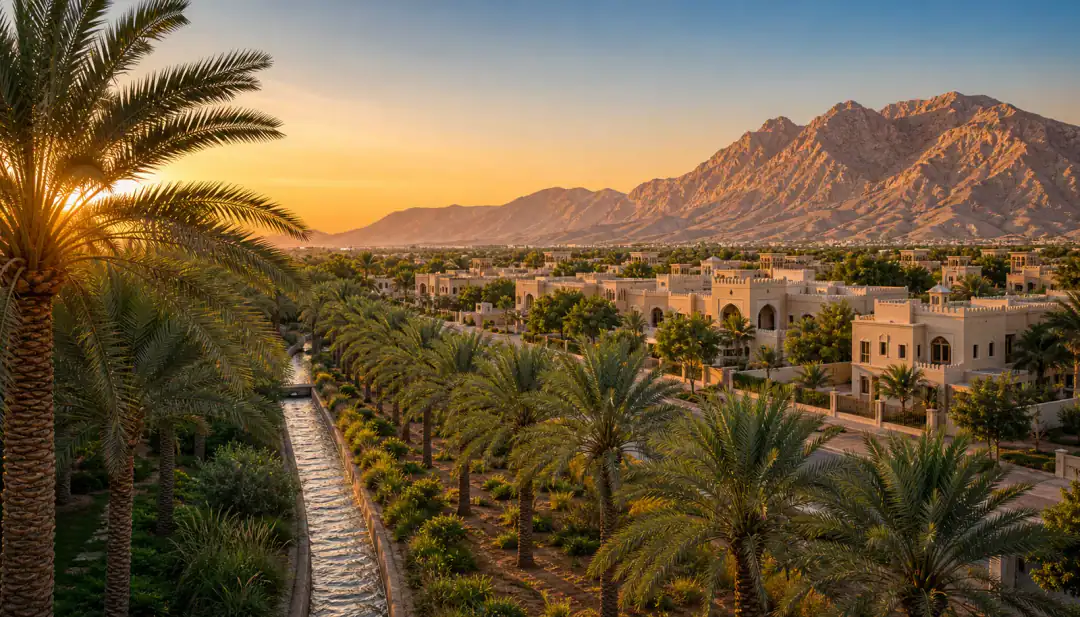
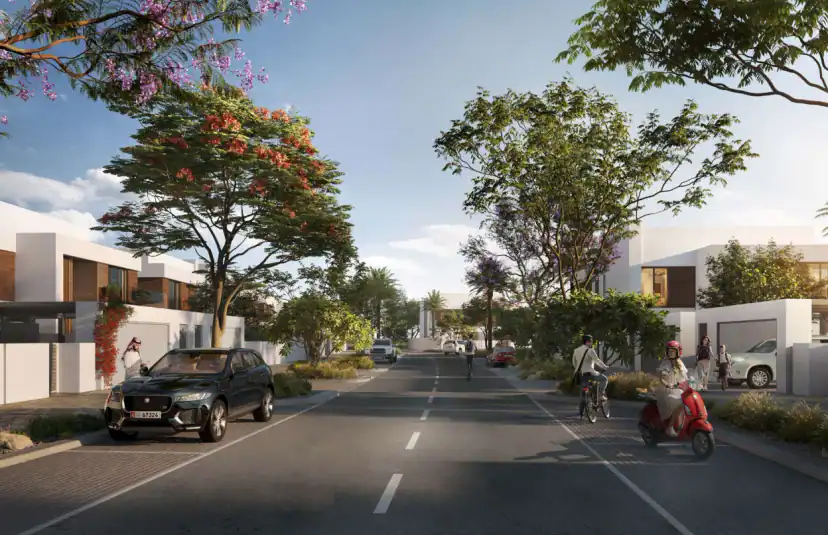
Al Ain Arabic name, Al- ʿ Ayn, translates to "the spring," a reference to the natural water sources that have sustained the city's oases for thousands of years. The "Garden City" nickname comes from its greenery: seven natural oases, public parks, tree-lined avenues, and decorative roundabouts, all maintained against a backdrop of strict building regulations limiting new construction to no more than seven floors.
Until Sheikh Zayed's death in 2004, the limit was even stricter at four storeys, with only a handful of hotels permitted to exceed it.
A Brief History of Al Ain
Al Ain and the neighbouring Omani town of Buraimi together form what is historically known as the Buraimi Oasis, an area inhabited for nearly 8,000 years. Archaeological sites at Hili, Rumailah, and Jebel Hafeet show evidence of the early Hafit culture, which built distinctive "beehive" tombs around 5,000 years ago. The ancient falaj irrigation system, an underground network of channels bringing water from boreholes to farms and palm groves, has been in continuous use here for centuries and remains a defining feature of the oases today.
Sheikh Zayed bin Sultan Al Nahyan, founder of the UAE, spent much of his early life in Al Ain, from around 1927 until he became Ruler of Abu Dhabi in 1966, governing from Al Jahili Fort and later Qasr Al Muwaiji, where his son Sheikh Khalifa bin Zayed Al Nahyan, the former UAE President, was born. In 1979, Queen Elizabeth II visited Al Ain during her tour of the Gulf. Following UAE independence in 1971, Al Ain grew rapidly as part of the Emirate of Abu Dhabi, and in 2011 it became the UAE's first UNESCO World Heritage Site, recognised for the Cultural Sites of Al Ain covering Hafit, Hili, Bidaa Bint Saud, and the historic oasis areas.
Climate in Al Ain
Al Ain has a hot desert climate with long, extremely hot summers and warm, mild winters. Average daily temperatures range from around 18.5°C in January to over 37°C in July and August, with record highs touching nearly 49°C in the summer months. Average annual rainfall is modest at around 62 millimetres, concentrated mostly between December and March.
Crucially, Al Ain inland desert location means significantly lower humidity than coastal Abu Dhabi or Dubai, particularly in summer, which is precisely why it has become a popular retreat for residents of both cities during the hotter months. Many Emirati families in Abu Dhabi maintain holiday homes in Al Ain for exactly this reason.
Neighbourhoods and Districts in Al Ain
Al Ain is made up of dozens of distinct towns and villages, far more granular than the island-based community structure seen elsewhere in Abu Dhabi. Key residential and historic districts include Al Jimi, Al Qattara, Al Muwaiji, Al Towayya, Al Foah, Al Sarooj, Hili, Zakher, Al Maqam, Al Khalidiya, Al Yahar, Al Dhahir, and Oud Al Tobah, among many others.
Al Towayya is a well-established residential zone near Al Ain Mall, popular for its central location and
access to amenities.
Al Muwaiji is a historically significant district, the birthplace of Sheikh Khalifa bin Zayed Al Nahyan, with
lush oases and a prestigious, tranquil residential character.
Al Jimi and Al Hili are favoured for spacious traditional standalone villas with large outdoor areas, while
Zakher and Al Maqam tend to offer larger land sizes at comparatively lower prices, popular with buyers prioritising space over central location.
Al Yahar, located on the highway connecting Al Ain to Abu Dhabi, suits commuters, with independent
villas at accessible prices and good access to schools and healthcare.
Al Sarooj, near the base of Jebel Hafeet, offers a resort-style living experience close to the Green
Mubazzarah hot springs and high-end hotels including the Radisson Blu.
Top Attractions in Al Ain
Jebel Hafeet
Jebel Hafeet is the second-highest peak in the UAE, rising 1,100 to 1,400 metres at its summit, an outlier of the Hajar mountain range just south of the city. The winding mountain road to the top is one of the most popular drives in the emirate, rewarding visitors with panoramic views, particularly striking at sunrise or sunset when the city lights begin to glow below. The Mercure Hotel sits near the summit, and the mountain forms part of the wider Jebel Hafeet Desert Park, home to the Jebel Hafeet beehive tombs.
Al Ain Oasis
A UNESCO World Heritage Site and the largest of the city's seven oases, Al Ain Oasis contains over 147,000 date palms irrigated by the ancient falaj system. Visitors can rent bikes at the entrance or walk the shaded pathways through this living example of centuries-old agricultural engineering.
Al Ain Zoo
Covering around 400 hectares and home to over 4,000 animals, Al Ain Zoo is one of the region's most established family attractions, offering giraffe feeding, camel rides, and a wide range of educational and conservation-focused experiences. Visiting in the late afternoon avoids the worst of the heat.
Al Ain National Museum and Al Ain Palace Museum
The National Museum, established in 1971, is organised into archaeology, ethnography, and gifts sections, offering insight into Emirati life before the discovery of oil. The Al Ain Palace Museum, a former royal residence, showcases traditional architecture and royal family history.
Qasr Al Muwaiji and Al Jahili Fort
Qasr Al Muwaiji, the birthplace of Sheikh Khalifa bin Zayed, has been restored and now hosts cultural exhibitions. Al Jahili Fort, among the largest forts in the region, was built by Sheikh Zayed bin Khalifa Al Nahyan in 1891 and today houses a permanent exhibition on the explorer Wilfred Thesiger, who stayed in Al Ain during his Empty Quarter expeditions.
Green Mubazzarah and the Camel Market
Green Mubazzarah, at the base of Jebel Hafeet, is known for its natural mineral hot springs. The Camel Market offers a genuine, if intense, look at traditional Emirati trading culture, where camels are bought and sold much as they have been for generations.
Hili Archaeological Park
Dating to the Bronze Age, Hili Archaeological Park sits alongside Hili Fun City, an amusement park, giving visitors a combination of ancient heritage and modern family entertainment in a single area.
Al Ain has five major malls: Al Ain Mall in the town centre, Al Jimi Mall (notable for housing an IKEA store), Bawadi Mall in Al Khrair, Remal Mall in Sanaiya, and Hili Mall in the Hili district. Most commercial activity is concentrated in and around the town centre, alongside traditional souqs for fruit, vegetables, and livestock along the road to Mezyad.
Schools and Education in Al Ain
Al Ain is home to the UAE's main federal university, the United Arab Emirates University, along with two campuses of the Higher Colleges of Technology, Al Ain University, and a campus of Abu Dhabi University.
It is also home to Horizon International, Etihad Airways' cadet pilot training centre.
Private schools, catering largely to the expatriate population, are concentrated in the Al Manaseer area and include Al Ain International School (British curriculum, part of the Aldar group), Al Ain English Speaking School, Al Dhafra Private School, Liwa International School, a branch of the International School of Choueifat, the CBSE-affiliated Indian School Al Ain, Our Own English High School, Brighton College Al Ain, and the newer Belvedere International School in Al Hili. Nursery options include Al Ain Juniors Nursery, Little Pearls Nursery, and Golden Bell Nursery.
Healthcare in Al Ain
Al Ain has a strong healthcare infrastructure for a city its size. Tawam Hospital, officially inaugurated in 1979 and managed by Johns Hopkins Medicine International since 2006, is one of the largest hospitals in the UAE with 503 beds, including a major oncology centre serving as the national cancer treatment referral hospital. Al Ain Hospital (also known as Al-Jimi Hospital), managed by the Medical University of Vienna International, provides general services across all medical disciplines with around 450 beds.
Kanad Hospital (formerly Oasis Hospital), established in 1960, is the oldest hospital in Al Ain and the second oldest in the UAE.
Transportation in Al Ain
Al Ain is connected to Abu Dhabi and Dubai via well-maintained highways, and the city operates an extensive bus network linking its districts to each other and to neighbouring emirates, supplemented by widely available taxis. Al Ain International Airport offers scheduled passenger flights to destinations including Egypt, Pakistan, and India, and a new railway line linking Al Ain to Abu Dhabi and the Port of Sohar in Oman is in the planning stages. Within the city itself, most former roundabouts have been replaced by traffic signals in recent years.
Property in Al Ain: Prices, Ownership Rules, and What to Know
This is where Al Ain differs most sharply from the rest of the Emirate of Abu Dhabi, and it is the part most online guides get wrong or skip entirely.
Can Foreigners Buy Property in Al Ain?
Compared with Yas Island, Saadiyat Island, or Al Reem Island, Al Ain has a much smaller number of designated investment zones open to foreign ownership. The legal position, however, changed materially in 2019. Law No. 13 of 2019 amended Abu Dhabi Law No. 19 of 2005 so that non-UAE nationals, whether individuals or companies, may own and acquire all principal and accessory real rights in properties located within officially designated investment areas. In practical terms, this can include full freehold ownership where the specific property falls inside an approved investment zone; outside those zones, foreign ownership remains restricted.
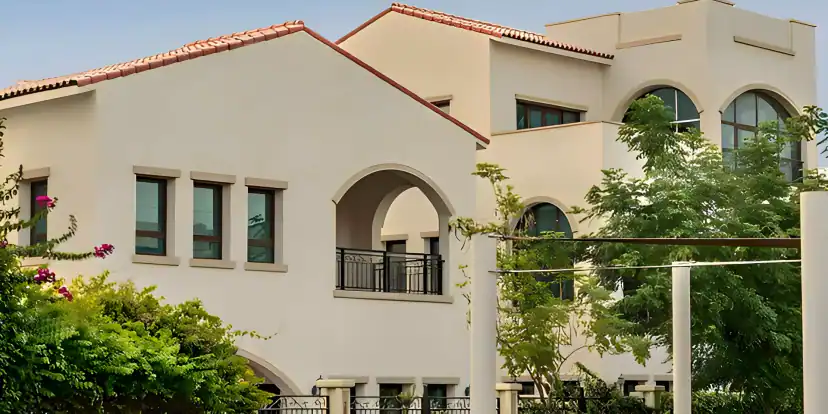
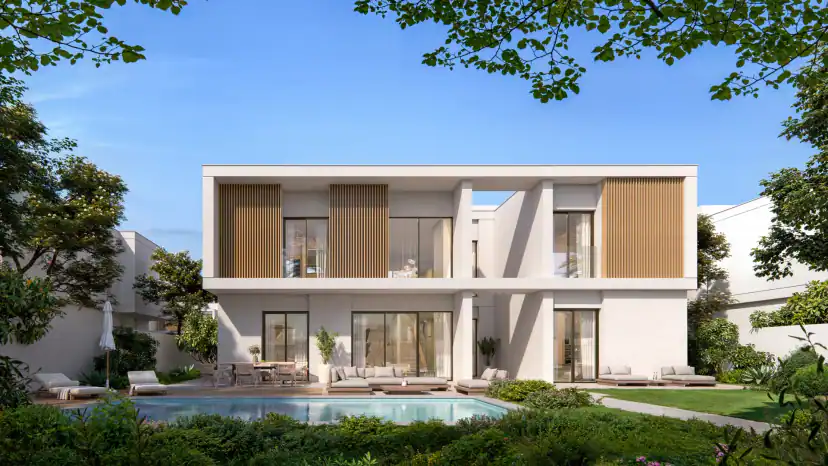
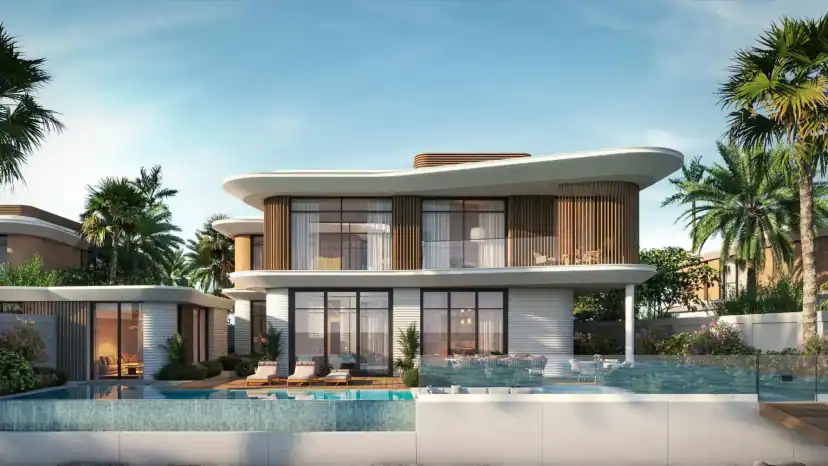
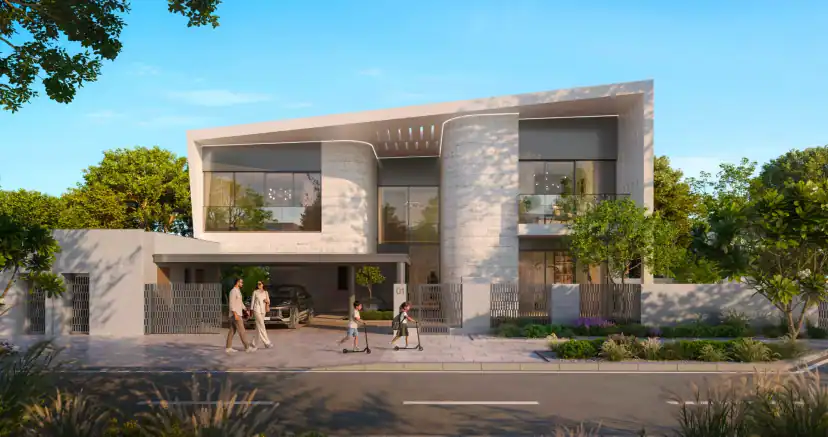
Al Ain therefore should not be described as a leasehold-only market for expatriates. Official Executive Council decisions have designated investment zones in the Al Ain Region, including Investment Zone No. 22 at Plot 200 in Shibak Basin, Al Faqa, and Investment Zone No. 27 for the Ain Al-Fayda Wilderness Project. Arabian Hills Estate is also listed in ADREC's project database as a plot development in Al Faqa and is widely marketed as a freehold community. Because eligibility depends on the exact project, plot, and title registration, foreign buyers should verify the specific property with ADREC or the relevant municipality before committing.
Al Ain Villa Prices in 2026
Al Ain consistently offers significantly more space per dirham than Abu Dhabi city or Dubai, and prices have remained relatively stable over time rather than swinging sharply, making it attractive to buyers who want predictability over rapid appreciation.
Typical current villa pricing in Al Ain:
- 3-bedroom villas: approximately AED 900,000 to AED 1.2 million
- 4-bedroom villas: approximately AED 1.2 million to AED 1.6 million
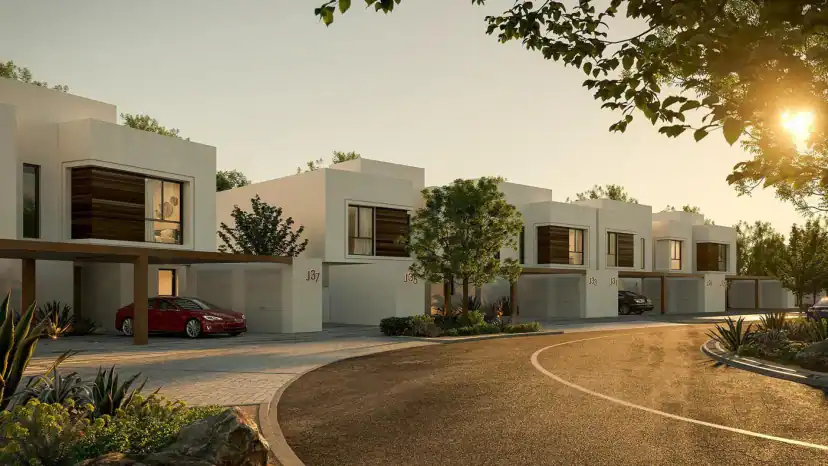
- 5-bedroom and larger villas: approximately AED 1.5 million to AED 2.5 million, particularly in sought-after areas like Al Hili and Al Towayya
Buyers focused purely on affordability and larger plot sizes tend to look toward Zakher and Al Maqam, where land sizes are generally bigger and per-square-foot pricing is lower than in more central districts.
The median sale price across all Al Ain property types currently sits at approximately AED 1,007,000, with a median price per square foot of around AED 141, both substantially below equivalent figures for Abu Dhabi city, where villas average closer to AED 8.92 million and the average apartment asking price is around AED 2.9 million.
Al Ain Rental Prices in 2026
Rental demand in Al Ain remains driven primarily by government employees, university staff and students, and families seeking a quieter, more affordable alternative to the capital.
Current typical annual rental ranges:
- 1-bedroom apartment: approximately AED 27,000 to AED 32,000
- 2-bedroom apartment: approximately AED 30,000 to AED 38,000
- 3-bedroom apartment: approximately AED 35,000 to AED 42,000
- 3-bedroom villa: approximately AED 50,000 to AED 60,000
- 5-bedroom villa: approximately AED 70,000 to AED 85,000
These figures sit well below comparable unit sizes in Abu Dhabi city, where rental yields in popular freehold communities typically run between 6% and 8%. Al Ain leasehold-dominated, lower-turnover market does not generate the same yield-driven investor interest as Yas Island or Al Reem Island, which is precisely why it appeals more to long-term residents and end-users than short-term yield investors.
Why Buyers Choose Al Ain Over Abu Dhabi City or Dubai
The investment and lifestyle case for Al Ain rests on a few consistent factors: significantly more living space for the same budget, a stable rather than volatile pricing pattern, strong schools and healthcare infrastructure, and a genuinely different pace of life centred on family, heritage, and greenery rather than waterfront towers. For UAE nationals and GCC citizens able to access freehold land directly, Al Ain offers some of the best value-per-square-foot land ownership anywhere in the emirate. For expatriates, the leasehold apartment market and developments like Arabian Hills Estate provide a realistic, if more limited, entry point.
Things to Do and Restaurants in Al Ain
Beyond its landmark attractions, Al Ain offers a genuine day-to-day lifestyle. Parks including Al Jahili Park and the gardens around the oases provide shaded picnic spots popular with families in the evenings. The dining scene ranges from international chains at Al Ain Mall to long-standing local favourites such as Al Fanar Restaurant & Cafe and Way Restaurant & Cafeteria. The city also has an international-standard go-kart circuit at Al Ain Sportplex, and is home to Al Ain Football Club, one of the most successful and decorated football clubs in the UAE and across Asia.
Looking to Buy Property in Al Ain or Wider Abu Dhabi?
Masterpiece Property is a trusted real estate agency in Abu Dhabi with strong knowledge of the emirate's full property landscape, from Al Ain leasehold apartment and villa market through to the freehold island communities closer to the capital. Whether you are an expat exploring leasehold apartment options in Al Ain, a UAE or GCC national considering freehold land in the city's residential districts, or comparing Al Ain against Abu Dhabi's coastal communities for your next move, the team provides clear, honest guidance based on current market data.
The agency covers apartments, villas, townhouses, and plots across Abu Dhabi's prime communities including Yas Island, Saadiyat Island, Al Reem Island, Al Raha Beach, Khalifa City, Masdar City, and Al Reef, alongside guidance on the distinct Al Ain property market.
Contact Masterpiece Property today at 800 666 888 to discuss property options in Al Ain and across Abu Dhabi.
Frequently Asked Questions
Is Al Ain in Abu Dhabi or Dubai?
Al Ain is in the Emirate of Abu Dhabi, not in Dubai. It is the second largest city in Abu Dhabi, about 160 km east of Abu Dhabi city and about 120 km from Dubai, on the border with Oman.
Is Al Ain an emirate?
No. Al Ain is not one of the seven emirates of the UAE. It is a city in the Emirate of Abu Dhabi and the centre of the Al Ain Region, one of the three regions of the emirate alongside Abu Dhabi and Al Dhafra.
What is the population of Al Ain?
Al Ain had a population of 873,839 in 2025, which makes it the fourth largest city in the UAE after Dubai, Abu Dhabi and Sharjah.
How big is Al Ain?
The Al Ain Region covers about 15,123 square kilometres, from the Oman border in the east to the Empty Quarter desert and the Saudi border in the south.
Where is Al Ain located?
Al Ain is located in the Emirate of Abu Dhabi, approximately 160 kilometres east of Abu Dhabi city and 120 kilometres south of Dubai, bordering the Omani town of Al-Buraimi to the east.
Why is Al Ain called the Garden City?
Al Ain earned the nickname "Garden City" because of its seven natural oases, extensive parks, tree-lined streets, and decorative roundabouts, combined with strict building height limits that have preserved its low-rise, green character.
How far is Al Ain from Dubai and Abu Dhabi?
Al Ain is about 1 hour 30 minutes from Abu Dhabi city and about 1 hour 15 minutes from Dubai by car, with both cities sitting roughly 130 kilometres away via well-developed highways.
Can expats buy property in Al Ain?
Expats can generally only own apartments or floors within multi-storey buildings on a long-term leasehold basis, typically up to 99 years, since Al Ain has almost no designated freehold zones. Arabian Hills Estate is a notable exception offering 100% freehold ownership to all nationalities.
What are property prices like in Al Ain compared to Abu Dhabi city?
Al Ain is significantly more affordable. Villas typically range from around AED 900,000 for 3-bedroom homes to AED 2.5 million for larger 5-bedroom properties, compared to an Abu Dhabi city average villa price of around AED 8.92 million.
Is Al Ain a good place to invest in property?
Al Ain suits long-term, stability-focused buyers more than short-term yield investors, since its leasehold-dominated market does not offer the same freehold flexibility or rental yield profile as Abu Dhabi's island communities. UAE and GCC nationals with access to freehold land generally see the strongest investment case.
What is the best area to live in Al Ain?
It depends on priorities. Al Towayya suits buyers wanting central access to Al Ain Mall. Al Muwaiji offers a prestigious, historic setting. Al Sarooj suits those wanting proximity to Jebel Hafeet and resort-style amenities. Zakher and Al Maqam suit buyers prioritising larger plots at lower prices.
What is the climate like in Al Ain?
Al Ain has a hot desert climate with extremely hot summers, often exceeding 40°C, and warm, mild winters. Its inland location means notably lower humidity than coastal Abu Dhabi or Dubai, making it a popular dry-season retreat.
What is the best time to visit Jebel Hafeet?
Sunrise and sunset are the most popular times to drive up Jebel Hafeet, offering dramatic views over Al Ain as the city lights begin to glow below the mountain.
Is Al Ain a UNESCO World Heritage Site?
Yes. In 2011, Al Ain became the UAE's first UNESCO World Heritage Site, recognised for the Cultural Sites of Al Ain covering Hafit, Hili, Bidaa Bint Saud, and the historic oasis areas.