Why Capital Appreciation Matters
The Foundation of Investment Returns
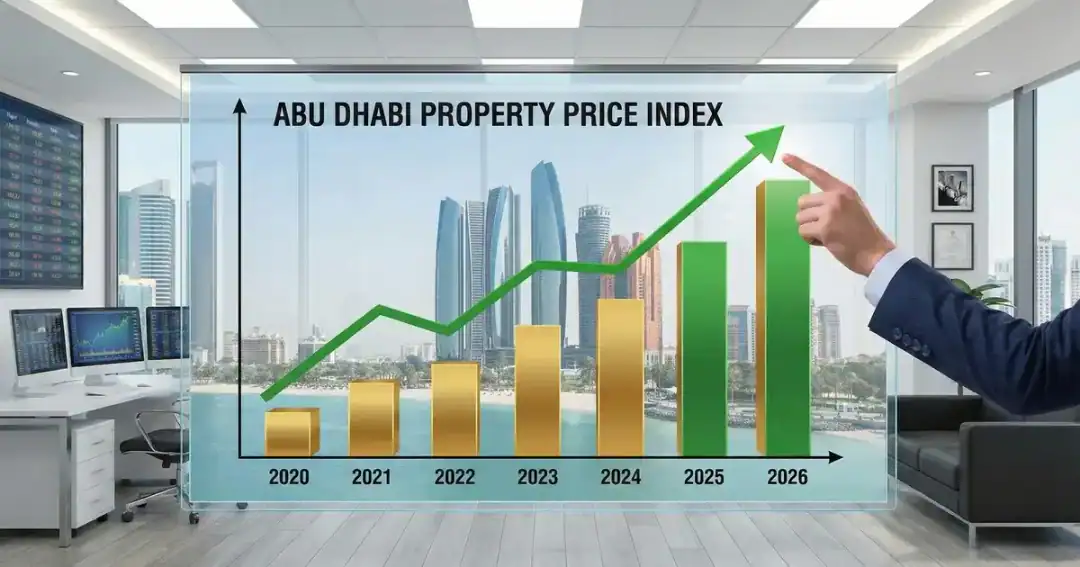
Capital appreciation represents the primary wealth-creation mechanism in real estate investment, often contributing 60-80% of total returns when combined with rental income. Unlike rental yields that provide steady cash flow, capital appreciation compounds over time, creating exponential wealth growth particularly evident in Abu Dhabi's 2020-2026 trajectory.
Three Key Benefits
1. Wealth Multiplication:A property purchased for AED 1.5 million in 2020 and appreciating at Abu Dhabi's average rate of 7-9% annually would be worth approximately AED 2.3-2.6 million by 2026, representing gains of AED 800,000-1,100,000 before accounting for rental income.
2. Inflation Hedge:Real estate appreciation typically outpaces inflation, preserving and growing purchasing power. Abu Dhabi's property appreciation of 7-15% annually (depending on segment) has significantly exceeded UAE inflation rates of 2-4%, providing genuine real returns.
3. Leverage Amplification:With mortgage financing enabling 75-80% loan-to-value ratios, appreciation multiplies equity returns. A 10% property appreciation on 25% equity represents a 40% return on invested capital, excluding rental income.
Abu Dhabi Property Market Overview: 2020-2026
From Crisis to Boom: The Six-Year Journey
The period from 2020 to 2026 represents one of the most dynamic chapters in Abu Dhabi's real estate history, characterized by:
- 2020: COVID-19 disruption and oil price collapse testing market resilience
- 2021: Recovery initiation with government stimulus and policy reforms
- 2022: Strong momentum building with transaction volume surges
- 2023: Market acceleration with record FDI and international participation
- 2024: Sustained growth across all segments with price appreciation peaking
- 2025-2026: Market maturity with record transactions and controlled supply
Cumulative Appreciation: 2020-2026Across Abu Dhabi's residential market, cumulative capital appreciation ranged from 45% to 135% depending on location, property type, and timing, with certain premium areas like Saadiyat Island and Yas Island significantly outperforming market averages.
Year-by-Year Appreciation Analysis
2020: Resilience Amid Unprecedented Challenges
Market Context:2020 brought extraordinary pressures with COVID-19 pandemic and oil price volatility, yet Abu Dhabi's property market demonstrated remarkable stability with 3,427 residential units sold worth AED 5 billion (+28% over 2019).
- Apartments declined 2-5%, villas increased 3-6%
- Villa prices averaged AED 9,691 per square meter
- Premium villa communities (Saadiyat, Yas) saw flat to +3% appreciation
- Mid-tier apartments adjusted -2% to -5%
The market's stability during crisis conditions reflected strong fundamentals and flight-to-quality behavior.
2021: Recovery and Momentum Building
Market Context:As global economic activity resumed, Abu Dhabi implemented aggressive policy reforms including expanded Golden Visa eligibility and 100% foreign ownership expansion, driving transaction values to AED 16.2 billion in Q3 alone.
- Villa appreciation: +14% annually
- Apartment appreciation: +1% annually
- Saadiyat Island villas: +12-15%
- Yas Island properties: +10-13%
2021 marked the definitive end of the 2015-2020 correction period, with H2 momentum setting the foundation for 2022-2023 acceleration.
2022: Acceleration Phase Begins
Market Context:With pandemic restrictions lifted and confidence restored, 2022 saw Abu Dhabi's property market shift into acceleration mode, with 9,010 sales deals worth AED 23.5 billion and 10,023 mortgage transactions worth AED 54.1 billion.
- Total transaction value increase: +8.5% year-over-year
- Transaction volume increase: +27.2% year-over-year
- Volume growth outpacing value growth indicated broadening participation
Luxury villas (+15-18%), mid-tier villas (+10-12%), premium apartments (+8-10%), and mid-tier apartments (+5-7%) all showed strong growth.
Area Performance:Yas Island led at +17-19%, followed by Saadiyat Island (+15-17%), Al Maryah Island (+12-14%), Al Reem Island (+7-9%), and Reem Hills (+8-10%).
Appreciation Analysis:2022 represented the inflection point where Abu Dhabi's market transitioned from recovery to genuine growth cycle, with solidified buyer confidence and healthy demand-supply dynamics.
2023: Market Acceleration and Record Growth
Market Context:2023 marked Abu Dhabi's emergence as a premier global destination with transaction values reaching AED 87.1 billion, a massive 159.5% increase over 2022, driven by economic diversification and international capital flows.
- Total transactions: AED 87.1 billion (+159.5% YoY)
- New registered investors: 9,448 (+71%)
- Non-resident investors: 1,098 (+175%), highlighting international appeal
- Golden Visa program driving AED 2M+ property segment demand
Waterfront villas (+18-22%), family villas (+15-18%), premium apartments (+12-15%), mid-tier apartments (+10-12%), and affordable segment (+8-10%) all showed robust growth.
Geographic Leaders:Saadiyat Island (+20-23%), Yas Island (+18-21%), Al Maryah Island (+15-17%), Al Reem Island (+12-14%), and Khalifa City (+10-13%) led appreciation.
Appreciation Analysis:2023 represented peak acceleration with nearly all segments achieving double-digit appreciation, supported by constrained supply of only 29,000 units under construction through 2025.
2024: Sustained Growth with Market Maturity
Market Context:Building on 2023's momentum, 2024 demonstrated sustainable growth with 7.5% population growth and nearly 10% working population expansion providing fundamental demand support.
- Residential Sales Price Index: +31.59% year-over-year
- Apartment prices: +34.77% annually
- Luxury villa prices: +15% annually
- Average weighted home value: AED 1,005 per sq ft
Studio apartments emerged as top performers with 14% annual appreciation over three years, outperforming larger units due to affordability and rental demand. Apartments showed 7.8% CAGR from 2023-2025.
Area-Specific Performance:Khalifa City led with +30% for villas, followed by Saadiyat Island (+21.2%), Yas Island apartments (+14%), Al Reem Island (+10.7%), and Reem Hills (+12-15%).
Appreciation Analysis:2024 showed appreciation broadening across all segments and locations, with mid-tier properties providing accessible investment opportunities. Infrastructure announcements like Yas Island railway station and Disneyland Abu Dhabi provided significant appreciation catalysts.
Market Context:The 2025-2026 period represents Abu Dhabi's transformation into a mature, internationally recognized market. Transaction values reached AED 142 billion in 2025 with 47% year-over-year growth, while 2026 forecasts indicate moderation to sustainable single-digit rates.
- Total transaction value: AED 142 billion (+47% YoY)
- Transaction volume: 39,000+ deals (+38% YoY)
- Off-plan dominance: 66% of transactions (AED 58.4 billion)
- Foreign Direct Investment: AED 6.2 billion (+35% YoY)
Weighted-average home value reached AED 1,005 per sq ft (+9.0% YoY), with luxury villas (+12-15%), premium apartments (+10-12%), mid-tier properties (+8-10%), and affordable segment (+6-8%) all showing solid growth.
2026 Projections:Analysts forecast 5-8% appreciation for 2026, representing healthy normalization. Cushman & Wakefield expects 8-12% combined price and rental growth through 2026, supported by approximately 6,500 new units scheduled for delivery against continued 6-7% annual population growth.
Appreciation Analysis:The transition from 15-20% annual appreciation to 5-8% reflects healthy market normalization supporting long-term sustainability, with quality focus shifting toward branded residences and smart home integration.
1. Khalifa City- Cumulative appreciation 2020-2026: Approximately 95-105%
- Peak annual rate: +30% (2024, villa segment)
- Key drivers: Affordable entry point, family amenities, government worker demand
- Investment highlight: Best value appreciation in Abu Dhabi
2. Saadiyat Island- Cumulative appreciation 2020-2026: Approximately 90-100%
- Peak annual rate: +21-23% (2023-2024)
- Key drivers: Cultural district, Louvre proximity, beach lifestyle, limited supply
- Investment highlight: Premium segment resilience with luxury appeal
3. Yas Island- Cumulative appreciation 2020-2026: Approximately 85-95%
- Peak annual rate: +17-21% (2022-2023)
- Key drivers: Entertainment destination, infrastructure investment, family focus
- Investment highlight: Highest capital appreciation velocity in premium segment
4. Al Maryah Island- Cumulative appreciation 2020-2026: Approximately 70-80%
- Peak annual rate: +15-17% (2023)
- Key drivers: Financial center, commercial proximity, luxury retail
- Investment highlight: Professional demographic with stable demand
5. Al Reem Island- Cumulative appreciation 2020-2026: Approximately 65-75%
- Peak annual rate: +12-14% (2023)
- Key drivers: Central location, marina lifestyle, established infrastructure
- Investment highlight: Consistent performer with strong rental yields
6. Reem Hills- Cumulative appreciation 2020-2026: Approximately 60-70%
- Peak annual rate: +12-15% (2024)
- Key drivers: New development, modern amenities, family orientation
- Investment highlight: Emerging area with growth runway
7. Al Reef- Cumulative appreciation 2020-2026: Approximately 50-60%
- Peak annual rate: +8-10% (2023-2024)
- Key drivers: Affordable pricing, established community, family facilities
- Investment highlight: Entry-level market with steady appreciation
8. Mohammed Bin Zayed City- Cumulative appreciation 2020-2026: Approximately 45-55%
- Peak annual rate: +7-9% (2024)
- Key drivers: Government sector workers, value pricing, expanding amenities
- Investment highlight: Affordable segment stability
Property Type Appreciation Comparison (2020-2026)
Overall Villa Appreciation: 75-105% (2020-2026)Villas consistently outperformed apartments during the early recovery (2020-2022) when space and privacy commanded premiums during COVID-19. The villa segment showed:
Appreciation by Villa Category
- Luxury waterfront villas (AED 5M+): 90-105% cumulative
- Premium villas (AED 3-5M): 80-95% cumulative
- Mid-tier villas (AED 2-3M): 70-85% cumulative
- Affordable villas (below AED 2M): 65-80% cumulative
Key Characteristics
- Higher volatility: Luxury villas show 15-20% annual swings
- Family appeal: School proximity adds 10-15% appreciation premium
- Land value component: Significant land appreciation in established areas
- Lower liquidity: Longer transaction times, smaller buyer pool
Apartments showed slower initial recovery but accelerated strongly from 2023-2026, with recent years seeing apartments projected to outperform villas in capital appreciation going forward.
Appreciation by Apartment Category
- Premium luxury (AED 3M+): 80-90% cumulative
- Mid-tier apartments (AED 1.5-3M): 70-85% cumulative
- One-bedroom apartments: 65-80% cumulative
- Studio apartments: 75-85% cumulative (strongest recent performance)
Key Characteristics
- Higher liquidity: Faster transaction times, broader buyer base
- Better yields: 5-7% rental returns vs 3-5% for villas
- Accessibility: Lower entry points attracting first-time buyers
- Studio advantage: 14% annual appreciation (2022-2024) leading all types
Factors Driving Capital Appreciation (2020-2026)
1. Government Policy Framework
Golden Visa Program Impact:The expanded Golden Visa eligibility requiring minimum AED 2 million property investment created direct incentive for foreign capital deployment. This policy alone contributed to:
- 175% increase in non-resident investors (2022-2023)
- Sustained demand in the AED 2-4 million price segment
- Premium placed on properties meeting visa thresholds
100% Foreign Ownership Expansion:Extension of full foreign ownership rights to more areas and property types eliminated previous barriers, broadening investment appeal and supporting price appreciation across previously restricted zones.
Regulatory Transparency:Enhanced regulatory oversight by Abu Dhabi Real Estate Centre (ADREC) with transparent reporting, standardized contracts, and investor protections increased international confidence, driving capital inflows.
2. Supply Discipline and Market Balance
Controlled Development Pipeline:Unlike previous cycles where oversupply crashed markets, Abu Dhabi's 2020-2026 development maintained discipline:
- 2020-2025: Only 29,000 units under construction
- 2026-2028: Controlled 46,600 units planned over three years
- Quality focus: Premium developments over volume projects
This supply constraint relative to demand growth created price support across all segments, with demand consistently exceeding new supply by 15-25%.
3. Demographic Growth and Urban Migration
Population Expansion:Abu Dhabi's population grew 7.5% in 2024 alone, with working population expanding nearly 10% year-over-year. This demographic surge created fundamental housing demand:
- Approximately 35,000-40,000 new residents annually (2022-2024)
- Average household size of 3.2 persons
- Required 11,000-12,500 new housing units annually
Corporate Relocations:Major companies establishing regional headquarters in Abu Dhabi Global Market (ADGM) brought high-earning professionals, supporting premium segment demand and creating rental pressure that lifted values.
4. Foreign Direct Investment Surge
International Capital Flows:FDI in real estate reached AED 6.2 billion through Q3 2025, representing 35% year-over-year increase. Key source markets included:
- India: Largest single nationality by transaction volume
- United Kingdom: Strong premium segment participation
- GCC Countries: Regional wealth diversification
- China: Growing interest in luxury developments
- European Union: Portfolio diversification investments
This international diversification reduced market volatility and provided sustained capital inflows supporting appreciation.
5. Infrastructure Investment and Tourism Growth
Major Infrastructure Projects
- Abu Dhabi Metro: Construction progress increasing property values near planned stations
- Yas Island expansion: Entertainment infrastructure supporting residential demand
- Saadiyat Cultural District: Museum and cultural venue completion creating lifestyle premium
- Airport expansion: Direct flights to 120+ destinations supporting international buyer access
Tourism arrivals reached 24.9 million visitors in 2024, up from 5.4 million in 2020, creating short-term rental opportunities and residential investment appeal.
Areas with Highest Future Appreciation Potential (2027-2030)
Top 3 High-Growth Prospects
1. Hudayriyat Island: "The Next Saadiyat"Projected appreciation 2027-2030: 35-50%
- Current status: Early development phase with significant runway
- Key catalysts: Beach lifestyle, natural island environment, master-planned community
- Investment window: Current entry point before infrastructure completion
- Target segments: Family villas and waterfront apartments
2. Reem Hills: "Continued Emergence"Projected appreciation 2027-2030: 30-45%
- Current status: Recent completions with ongoing development
- Key catalysts: Modern amenities, competitive pricing, family orientation
- Investment window: Secondary market opportunities as early buyers exit
- Target segments: Townhouses and mid-tier villas
3. Al Shamkhah: "Affordable Growth Engine"Projected appreciation 2027-2030: 28-40%
- Current status: Established community with expansion potential
- Key catalysts: Government worker demand, value pricing, improving amenities
- Investment window: Current attractive entry points
- Target segments: Affordable villas and apartment complexes
2027-2030 Market Projections
Supply Pipeline Analysis
Planned Deliveries
- 2027: Approximately 12,400 residential units
- 2028: Approximately 21,400 units (peak delivery year)
- 2029-2030: Over 33,000 total units in pipeline
With population growth of 6-7% annually requiring 11,000-13,000 new units per year, absorption should remain healthy, though 2028's concentrated supply requires monitoring for localized oversupply.
Price Growth Forecasts
Conservative Scenario (5-6% Annual Appreciation)
- Assumes global economic headwinds
- Slower population growth
- Higher supply delivery rates
- Results in 22-26% cumulative appreciation 2027-2030
Base Case Scenario (7-8% Annual Appreciation)
- Assumes continued economic diversification
- Steady population growth at current rates
- Balanced supply-demand dynamics
- Results in 31-36% cumulative appreciation 2027-2030
Optimistic Scenario (9-10% Annual Appreciation)
- Assumes major project catalysts (Disneyland Abu Dhabi)
- Accelerated corporate relocations
- Constrained supply relative to demand
- Results in 41-46% cumulative appreciation 2027-2030
Base case scenario appears most probable, with moderate single-digit appreciation representing healthy market sustainability after the exceptional 2022-2025 growth period.
Investment Strategies for Capital Growth
Strategy 1: Early-Stage Development Focus
Approach: Target areas in early development phases before infrastructure completion
Implementation
- Research planned infrastructure projects (metro stations, cultural venues)
- Identify developments within 1-2km of planned amenities
- Purchase during pre-sale or early construction phases
- Hold through completion and initial occupancy period
- Exit as area matures and appreciation moderates
Hudayriyat Island, Al Shamkhah expansion areas, new Reem Hills phases
Expected Returns: 35-50% over 3-5 year hold period
Risk Profile: Medium-high (construction delays, developer quality)
Strategy 2: Infrastructure Arbitrage
Approach: Buy properties near confirmed infrastructure before price adjustments
Implementation
- Monitor ADREC and government announcements for infrastructure plans
- Purchase properties within 500m-1km of planned metro stations
- Focus on apartments and townhouses benefiting from connectivity
- Hold until infrastructure completion
- Capture 15-25% infrastructure premium
Properties near confirmed Abu Dhabi Metro Phase 1 stations
Expected Returns: 25-40% over 4-6 year hold period
Risk Profile: Medium (timeline delays, route changes)
Strategy 3: Luxury Supply Constraint Play
Approach: Target premium segments with limited future supply
Implementation
- Focus on waterfront villas and luxury apartments
- Prioritize established areas (Saadiyat, Yas) with restricted development
- Accept lower initial yields (2-4%) for appreciation potential
- Hold long-term as scarcity value increases
- Benefit from wealth effect as Abu Dhabi economy grows
Saadiyat Cultural District, Yas Bay, Mamsha Al Saadiyat
Expected Returns: 30-45% over 5-7 year hold period
Risk Profile: Low-medium (market corrections, luxury segment volatility)
Strategy 4: Value-Add Renovation Approach
Approach: Purchase older properties in prime locations for renovation
Implementation
- Target properties 10+ years old in established areas
- Budget 15-25% of purchase price for quality renovations
- Focus on kitchens, bathrooms, smart home integration
- Rent at premium rates or sell at updated market values
- Capture 20-30% immediate equity through renovation
Al Reem Island older towers, Corniche older apartments
Expected Returns: 35-50% through renovation + market appreciation over 2-4 years
Risk Profile: Medium-high (renovation costs, execution quality)
Strategy 5: Micro-Location Selection Within Established Areas
Approach: Identify best micro-locations within broader high-performing areas
Implementation
- Within target area, map schools, metro stations, beaches, parks
- Focus on properties within 500m walking distance of key amenities
- Prioritize corner units, higher floors, water views
- Purchase at 10-15% premium to lower-tier units
- Capture additional 10-15% appreciation through location premium
Any established community with specific amenity clusters
Expected Returns: 30-40% above area average over 4-6 years
Risk Profile: Low-medium (requires detailed local knowledge)
Risk Considerations for Capital Appreciation
Market-Level Risks
Economic Cycle Sensitivity:Real estate appreciation correlates with economic growth. Global recession, oil price collapse, or regional instability could pause or reverse appreciation trends. Mitigation: Diversify across locations and property types.
Supply-Demand Imbalance:The 21,400 units scheduled for 2028 could create localized oversupply if demand softens. Mitigation: Monitor absorption rates quarterly and avoid concentration in single development clusters.
Interest Rate Increases:Rising mortgage rates reduce buyer purchasing power, potentially limiting price growth. Mitigation: Consider all-cash purchases or fixed-rate financing when possible.
Area-Specific Risks
Infrastructure Delays:Projects depending on metro completion or new amenities face timeline risk. Mitigation: Don't overpay based on unconfirmed future infrastructure.
Developer Delivery Risk:Construction delays or quality issues can impact appreciation timing. Mitigation: Focus on established developers with proven delivery records.
Community Maturation:Early-stage areas may take longer to develop amenities than projected. Mitigation: Accept longer hold periods and avoid leverage on emerging areas.
Conclusion: Six Years of Transformation
Abu Dhabi's real estate market from 2020 to 2026 tells a story of remarkable transformation and resilience. From weathering the perfect storm of pandemic and oil price collapse in 2020 to achieving record-breaking transaction values of AED 142 billion in 2025, the emirate has emerged as a mature, globally competitive property destination.
Key Takeaways from 2020-2026
- Cumulative appreciation of 60-105% across most segments demonstrates exceptional value creation
- Supply discipline prevented oversupply crashes that characterized previous cycles
- Government policy frameworks including Golden Visa created sustained international demand
- Demographic growth of 7-8% annually provided fundamental demand support
- Market maturity with 47% transaction growth in 2025 shows sustained momentum
The next four years present continued opportunity, albeit with moderated expectations. Base case projections of 7-8% annual appreciation represent healthy, sustainable growth that balances investor returns with market accessibility. Areas like Hudayriyat Island, Reem Hills, and Al Shamkhah offer compelling entry points for capital appreciation strategies.
Investment Philosophy:Successful capital appreciation investing in Abu Dhabi requires:
- Long-term perspective: Minimum 5-7 year hold periods for optimal appreciation capture
- Location focus: Premium areas with supply constraints and amenity concentrations
- Quality orientation: Established developers and well-maintained properties
- Timing awareness: Early-stage area entry or infrastructure-driven opportunities
- Risk management: Diversification across locations and property types
Abu Dhabi's property market has proven its resilience and growth potential through the 2020-2026 period. For investors seeking capital appreciation in a stable, regulated environment with strong fundamental drivers, Abu Dhabi presents compelling opportunities for the decade ahead.
As always, thorough due diligence, professional guidance, and clear investment objectives remain essential for maximizing capital appreciation while managing risks effectively.
Masterpiece Property's agents can show the actual resale history of a specific building or villa row, so a buyer sees how prices there have moved rather than relying on an emirate wide average.